You see the setup forming, buy before price reaches your level, get stopped during the pullback, and then watch the move happen without you. The idea was good. The entry was early.
That moment hurts twice. You lose money, then lose confidence because the market later appears to prove you right. The next time, you may enter even earlier to avoid missing out again.
Choose the right guide: Entering before confirmation? Stay here. Entering after the move has already begun? Use Stop Chasing Trades to measure what remains.
Why good traders still enter early
Early entries usually come from a reasonable idea mixed with an unfinished setup.
You may see:
- a strong trend,
- a move toward support or resistance,
- a breakout that looks close,
- an options level you expect to matter, or
- a market theme that supports your direction.
The mistake is treating “price may react here” as “price has reacted here.” It is like leaving for school because the bus is nearby on the map. Nearby does not mean it has reached your stop.
The cost of entering before confirmation
An early entry can create three problems:
- Your stop sits inside normal movement. Price has not finished testing the area.
- Your risk grows. You may widen the stop when the setup does not work immediately.
- You judge the idea by the result. A later move makes the early decision look better than it was.
A trade can eventually move in your direction and still have been poorly timed.
Separate the idea from the trigger
Your idea explains what could happen. Your trigger explains what must happen before you enter.
For example:
- Idea: SPY may bounce from a support area.
- Trigger: SPY tests the area, rejects lower prices, and closes back above the level.
- Invalidation: Price accepts below the area instead of reclaiming it.
- Target: The next resistance or potential upside target.
Without a trigger, the trader is guessing when the idea begins.
A manual framework for waiting
1. Mark the decision area
Choose the level that matters before price reaches it. This may be a prior high or low, an overnight level, VWAP, or an options-derived key level.
2. Pick one reaction
Decide what evidence your setup requires:
- a hold above support,
- a reclaim after a brief break,
- a rejection from resistance, or
- a breakout followed by a retest.
Do not change the required reaction because price is moving fast.
3. Let the market finish the test
The first touch can be noisy. Price may move through a level, test the other side, and return. Waiting for your chosen reaction can keep the stop outside some of that unfinished movement.
4. Define invalidation
Write the price behavior that makes the setup wrong. Invalidation is not “I feel uncomfortable.” It is evidence that the level or reaction failed.
5. Check the next target
The target should leave enough room for the trade to make sense. If price is already close to the next decision area, waiting may reveal that the opportunity is smaller than it first looked.
An illustrative example
Imagine QQQ is falling toward a planned support level at $500. The trader expects a bounce and buys at $501.20 because price is “close enough.” QQQ trades through $500, reaches $499.40, and then reclaims $500 before moving higher.
The original idea was possible, but the early entry gave the market no time to finish the test. A patient plan might require the reclaim first and place invalidation below the completed reaction.
This example is illustrative and does not describe a live recommendation.
How Eden makes the decision clearer
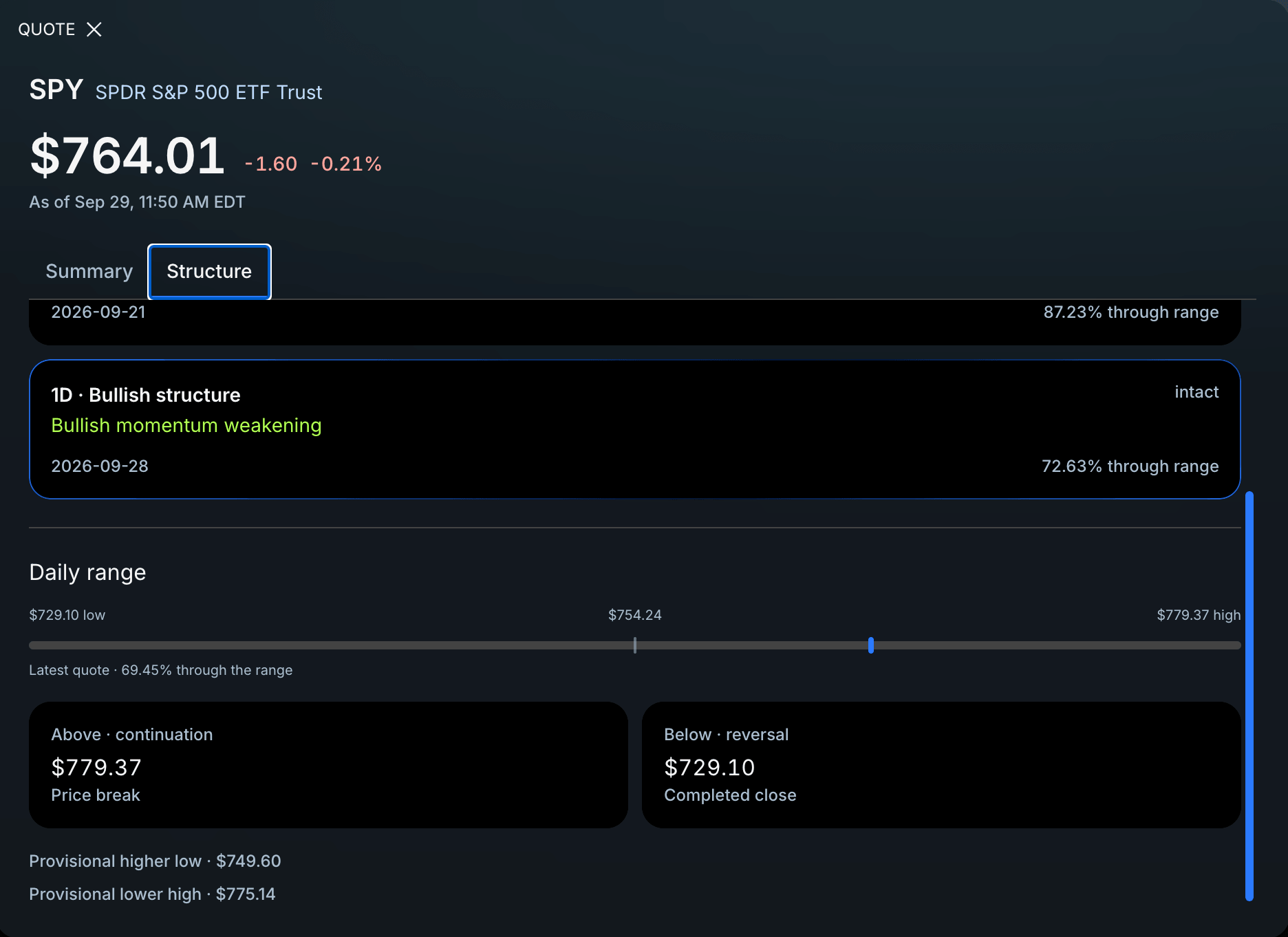
Enter a ticker in Eden and see its current price, nearby levels, market structure, possible invalidation context, and potential price targets in one view. That reduces the temptation to enter while you are still collecting the plan.
Use Eden to answer:
- Which level am I waiting for?
- What reaction would make the idea actionable?
- What would invalidate that reaction?
- Is there enough room to the next potential target?
Eden does not press the button or tell you that confirmation has occurred. It gives you a clearer map so you can wait for your rules.
For the next step, read How to Time a Trade Entry Using Support and Resistance Confirmation. If price has already left your level, use How to Tell If You’re Too Late to Enter a Trade.
A five-second entry check
Before buying or selling, finish this sentence:
I will enter only if price __________ at __________. The idea is wrong if __________. My first potential target is __________.
If you cannot fill in each blank, the setup is still an idea—not a trade plan.
Frequently asked questions
Does waiting for confirmation mean I will get a worse price?
Sometimes. Confirmation trades a little price advantage for more evidence. The goal is not the lowest possible entry; it is an entry you can explain and manage.
What if price moves without confirming?
Let it go. A missed trade costs no trading capital. Entering without your setup can build an expensive habit.
Is the first touch of support always a bad entry?
No. Some strategies are built around first touches. The key is deciding that rule before price arrives and using risk that fits the strategy.
Takeaway
You keep entering good trades too early when a strong idea replaces a finished trigger. Mark the level, name the reaction, define invalidation, and check the target before you enter. The market does not owe you every move.