
To swing trade on Webull, build the plan first and use Webull only to place and manage the order. Choose a liquid stock or ETF, define the entry, invalidation, target, and size, then select the order type that matches the plan.
Can you swing trade on Webull?
Yes. Webull currently lists market, limit, stop, stop-limit, trailing-stop, conditional, and grouped equity orders such as take-profit/stop-loss and OCO. Because a swing trade is held overnight, it is not a same-day round trip. Cash, margin, settlement, and risk rules still apply, so confirm the current order screen and support pages before depending on any summary.
Read swing trading vs. day trading for the holding-time and workload differences. If you use another broker, the Robinhood swing-trading workflow follows the same plan-first process.
Webull fills the practice and execution jobs. The best trading tools for beginners guide shows where replay, journaling, an economic calendar, and a planning layer fit around the broker.
Step 1: Build a small watchlist
Choose liquid stocks or ETFs that meet these swing trading criteria:
- bullish weekly or monthly structure,
- bullish momentum beginning or strengthening,
- enough liquidity to enter and exit without a large spread,
- and a clear invalidation.
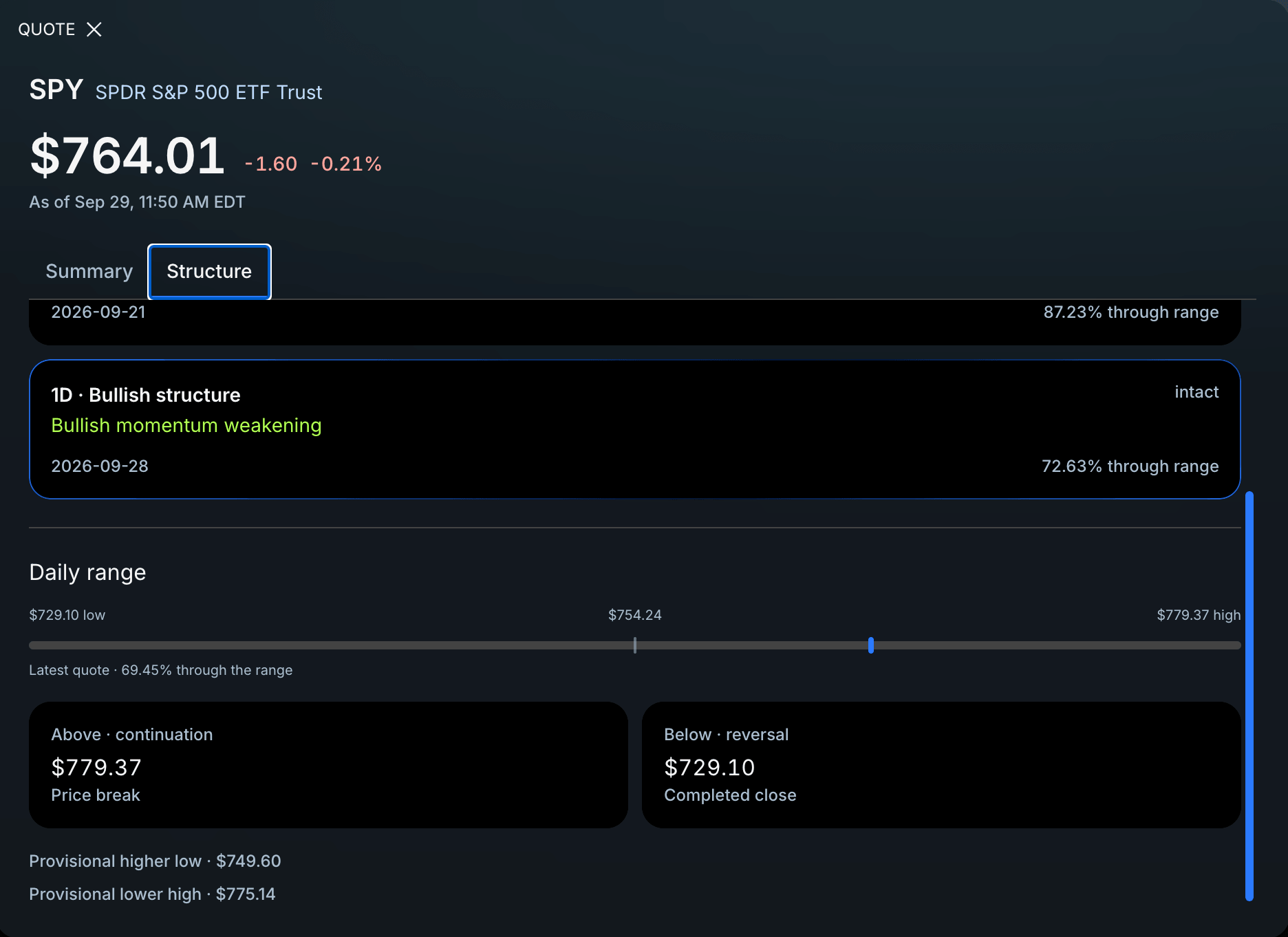
Eden’s Quote widget can summarize larger-time-frame structure and momentum. Check earnings, company events, economic releases, and whether you are willing to hold through them.
Step 2: Create the trade map
Before opening Webull, mark:
- P-Trans and N-Trans,
- nearby areas of interest,
- the planned invalidation,
- and the weekly, monthly, quarterly, or yearly price target that matches the hold.
The roadmap should answer:
- What must happen before I enter?
- What price behavior proves the idea wrong?
- Which major target am I aiming for?
- How much am I willing to lose if the idea fails?
Step 3: Define invalidation and size
Position size comes from the distance between entry and invalidation. If the plan can lose $50 and that distance is $2 per share:
$50 ÷ $2 = 25 shares
This is arithmetic, not a recommended risk amount. Overnight gaps can make the actual loss larger.
Step 4: Execute the order on Webull
Search for the ticker, choose Trade, select the side, and complete the order ticket. Webull’s current equity list includes:
- market and limit orders,
- stop and stop-limit orders,
- trailing stops,
- conditional orders,
- take-profit/stop-loss groups,
- OCO, OTO, and OTOCO groups.
A market order seeks an immediate fill but does not control price. A limit order controls the worst acceptable price but may not fill. A stop becomes a market order when triggered. A stop-limit controls the limit after activation but may not execute.
For stocks, Webull lists day and good-til-canceled durations. A day order expires at the end of the applicable session. A GTC order generally remains active for up to 90 calendar days. Webull notes that trailing stops are not available as GTC orders. Verify the ticket because availability can depend on the order and session.
Step 5: Review before submitting
Confirm:
- ticker and side,
- quantity,
- order type,
- limit or stop price,
- duration,
- estimated cost,
- and remaining buying power.
Read the final confirmation screen. A typing error can ruin a good map.
Step 6: Manage the swing trade
Follow the original plan after entry. Review the position after the close and before the next session. Do not turn a failed trade into a long-term investment or move invalidation only to avoid closing.
Important overnight risk
Stocks can gap after earnings, news, or economic releases. A triggered stop can fill far from its stop price. A stop-limit can avoid a worse price but may not fill at all. Size the trade so one gap does not create an unacceptable loss.
What about swing trading options on Webull?
Webull supports options, but options add expiration, time decay, volatility, assignment, and liquidity risk. Read What Is Swing Trading in Options? and the OCC disclosure before trading them. Build the stock plan first, then decide whether an option is the right instrument.
Frequently asked questions
Can you swing trade on Webull?
Yes. Webull supplies the order tools. You supply the setup, invalidation, target, and size.
Can I swing trade on Webull without a margin account?
Yes. Webull offers cash accounts. Its current guidance says stocks, ETFs, and options generally settle on the next business day. Using unsettled funds and selling before settlement can create a good-faith violation or buying-power restriction.
Does Webull choose the swing trade for me?
No. The broker executes your instructions. It does not replace the trade plan.
Can a stop guarantee my maximum loss?
No. A stop may fill worse during a gap or fast market. A stop-limit may not fill.
Official sources
- Webull, Supported Investments and Order Types
- Webull, Cash Buying Power and Settlement
- Webull, Account Types
- OCC, Characteristics and Risks of Standardized Options
Takeaway
Build the map before opening the Webull order ticket. Define the trigger, invalidation, target, and size. Then choose the order type carefully and review every field before submitting.