Bullish trigger
$37 P-Trans. NKE was near the level where bullish momentum began.
Play 02 · Swing trade · Winner
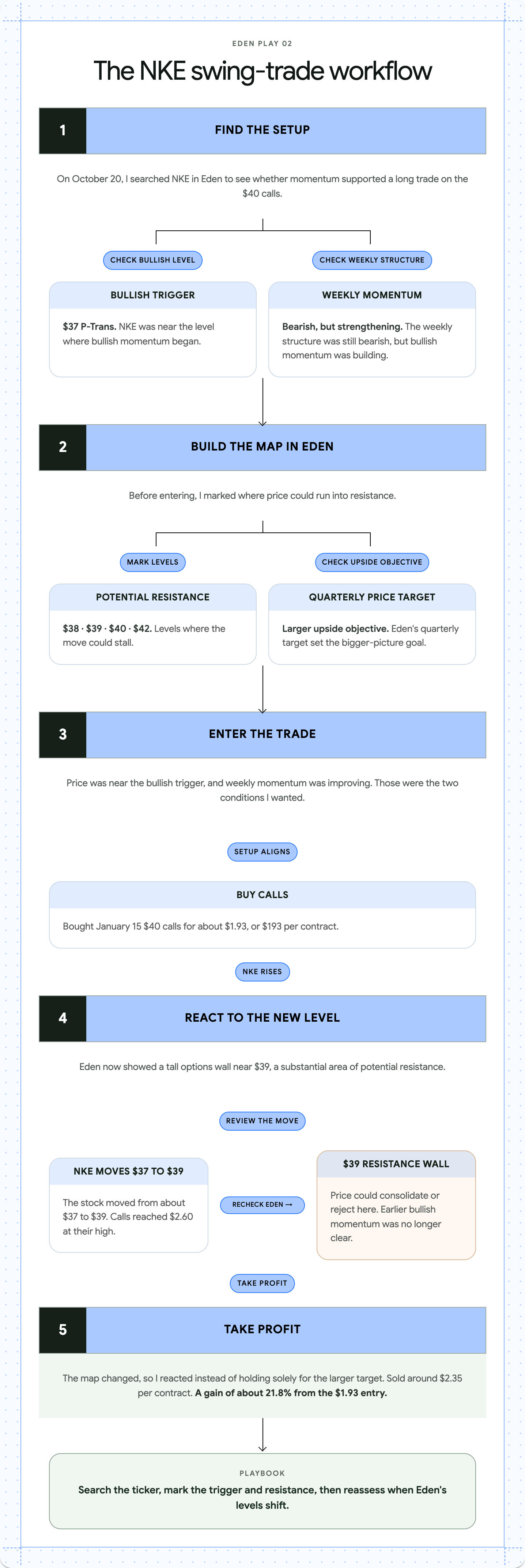
This historical recap shows how I used Eden to find NKE's bullish trigger, map potential resistance, enter only after the setup aligned, and take profit when the map changed.
 By Ruben Leija, Founder and CEO of Eden
Eden Play 02
On October 20, I searched NKE in Eden to see whether momentum supported a long trade on the $40 calls.
$37 P-Trans. NKE was near the level where bullish momentum began.
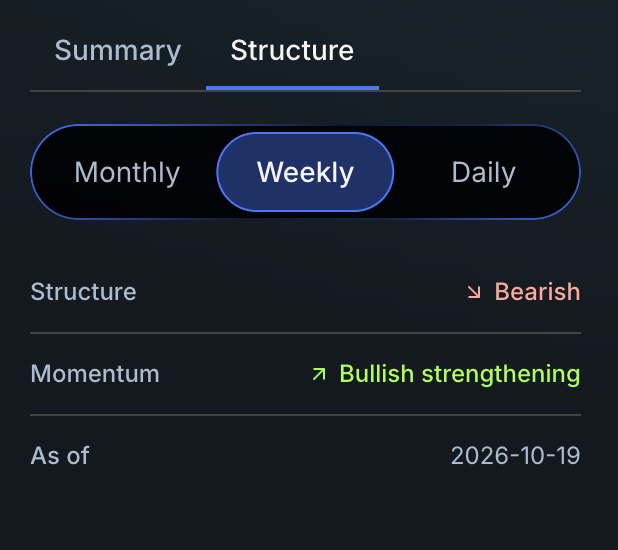
Bearish, but strengthening. The weekly structure was still bearish, but bullish momentum was building.
Before entering, I marked where price could run into resistance.
$38 · $39 · $40 · $42. Levels where the move could stall.
Larger upside objective. Eden's quarterly target set the bigger-picture goal.
Price was near the bullish trigger, and weekly momentum was improving. Those were the two conditions I wanted.
Bought January 15 $40 calls for about $1.93, or $193 per contract.
NKE rises
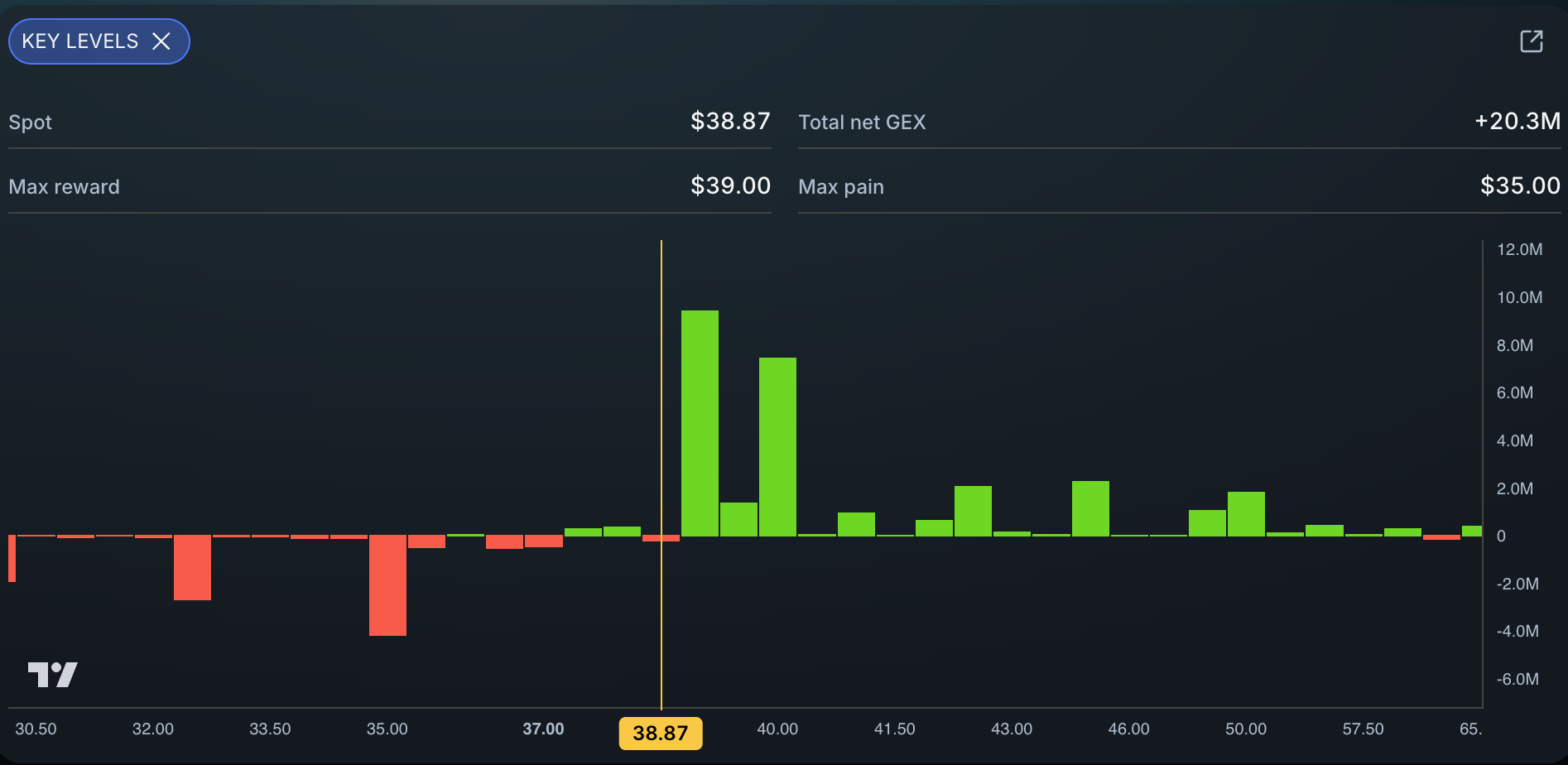
Eden now showed a tall options wall near $39, a substantial area of potential resistance.
The stock moved from about $37 to $39. Calls reached $2.60 at their high.
Price could consolidate or reject here. Earlier bullish momentum was no longer clear.
Take profit
The map changed, so I reacted instead of holding solely for the larger target. Sold around $2.35 per contract. A gain of about 21.8% from the $1.93 entry.
On October 20, I searched NKE in Eden to check whether the market structure and momentum supported a long swing-trade plan. This started with the ticker—not with a contract or a return target.
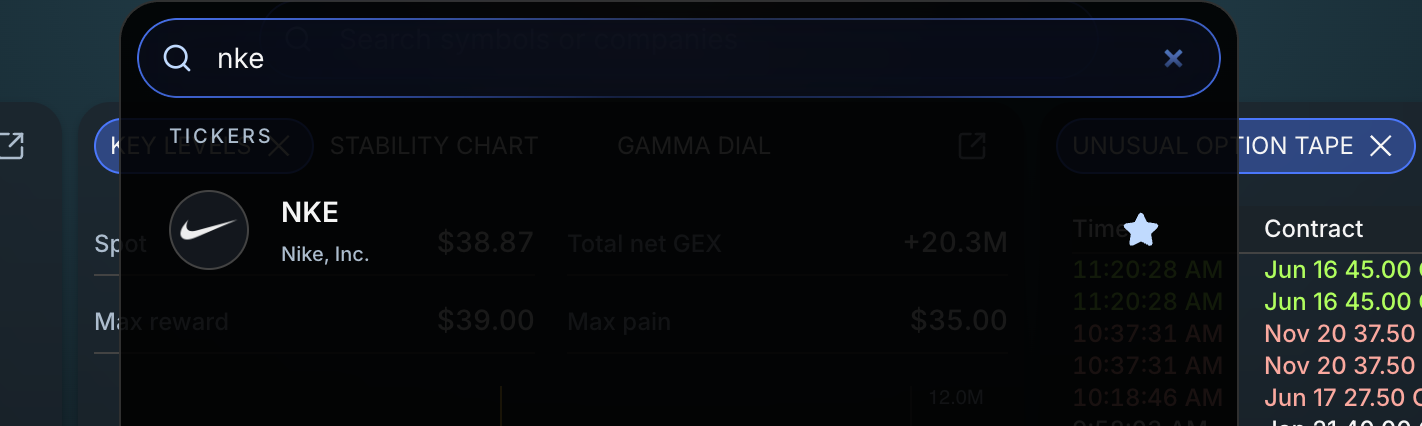
NKE was near the $37 P-Trans key level, where bullish momentum began. The weekly structure was still bearish, but momentum was strengthening. Those mixed conditions mattered: I had a potential bullish trigger, not proof that the larger trend had already changed.
Before buying the calls, I marked $38, $39, $40, and $42 as potential reaction areas. Eden's quarterly price target provided a larger upside objective, but it was a planning reference—not a promised destination. This is the same reason I prefer to define the price target before entry.
NKE was near the bullish trigger and weekly momentum was improving. I bought January 15 $40 calls for about $1.93, or $193 per contract. Contract selection still matters because gamma affects how an options contract responds as the stock moves.
NKE moved from roughly $37 to $39, and the calls reached $2.60 at their high—about 34.7% above the $1.93 entry. When I checked Eden again, the options map showed a substantial wall near $39. Price could consolidate or reject there, and the earlier bullish momentum was no longer as clear.
I sold the calls around $2.35, or $235 per contract. The $0.42 premium increase divided by the $1.93 entry equals a gain of approximately 21.8% before fees. I reacted to the new resistance instead of holding solely for the larger quarterly target.