
Trade plan at a glance
- Market
- TSLA calls
- Trade type
- Day trade
- Bullish trigger
- $400 P-Trans
- Confirmation
- Break above $405
- Reaction levels
- $405, $407.50, and $410
- Weekly target
- $412.58
- Realized result
- +27%
1. Choose a liquid market
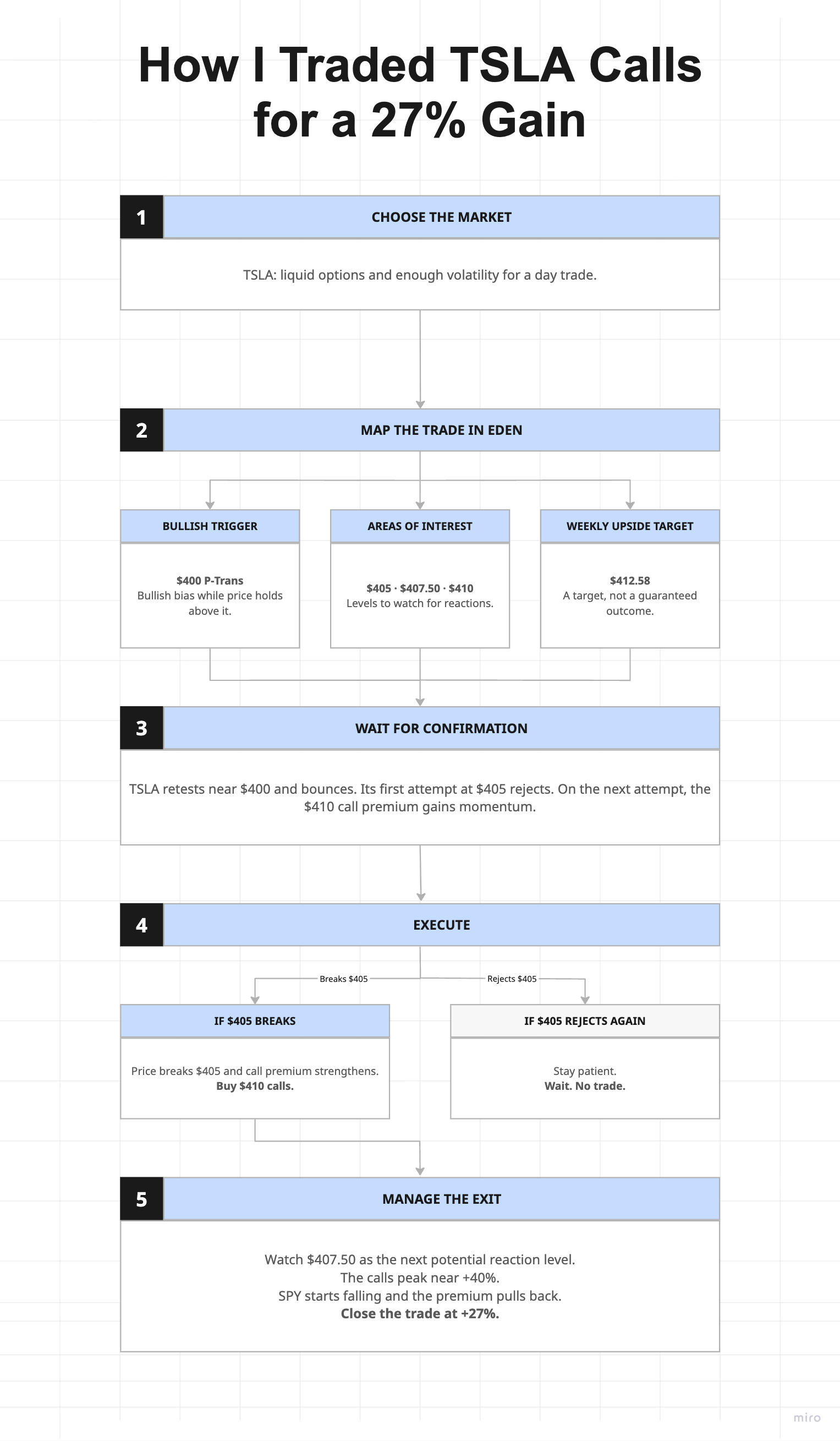
I chose TSLA because its options were liquid enough to enter and exit efficiently, while the stock had enough volatility to support a day-trade setup.
2. Map the trade in Eden
Eden showed a bullish P-Trans key level near $400. The plan stayed bullish while price held above it. I marked $405, $407.50, and $410 as areas where price could react, with $412.58 as the weekly upside target—not a guaranteed outcome. This follows the same target-first process explained in how to set a price target before entering.
3. Wait for confirmation
TSLA retested near $400 and bounced. Its first attempt at $405 rejected, so I waited. On the next attempt, the $410 call premium began gaining momentum as price pressed the level again. The important distinction was waiting for price confirmation instead of entering only because TSLA was near the planned level.
4. Execute only after the break
The decision was conditional: buy the $410 calls if TSLA broke $405 with strengthening premium. If $405 rejected again, the correct action was to wait and take no trade. The strike still had to fit the planned move; gamma affects how an options contract responds as the stock travels toward its target.
5. Manage the exit at the next level
I watched $407.50 as the next potential reaction level. The calls peaked near +40%, but SPY started falling and the premium pulled back. I closed the trade at +27% rather than treating the weekly target as a promise.