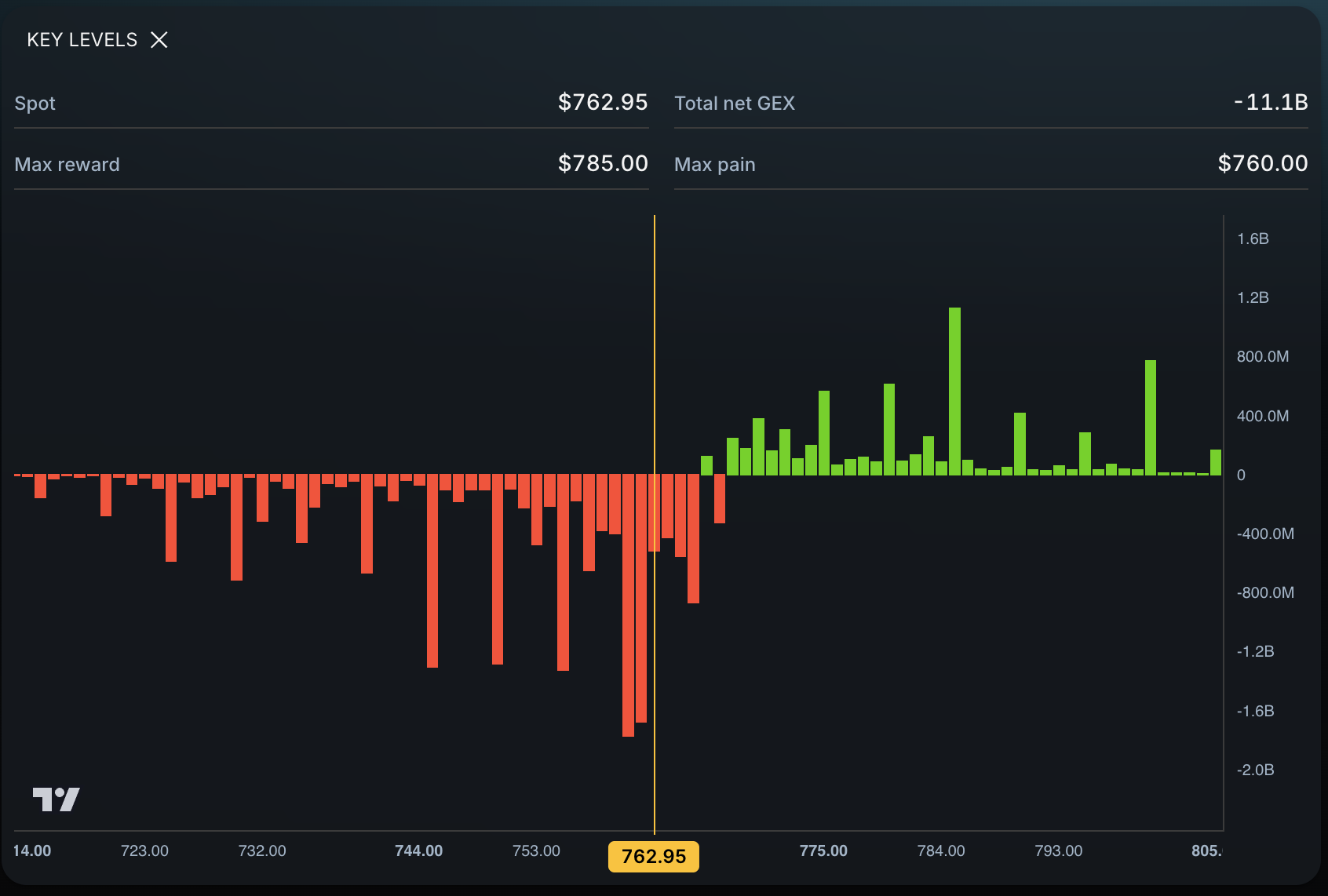
The best gamma exposure tool for a retail trader is the one that turns options data into a decision you can explain. Some tools focus on key levels. Others combine GEX with live options flow, dark-pool data, scanners, research, or community. More data is useful only when it helps you plan the next trade.
Information checked October 5, 2026. Features and prices change. Verify current details on each provider’s official website.
What a useful GEX tool should answer
Gamma exposure, or GEX, estimates how options positioning may affect hedging around different prices. Think of it as a traffic map. It can show where movement may slow down or become less stable, but it cannot promise which road price will take.
Before paying for a tool, ask whether it helps you answer:
- Where could price react?
- What market condition am I trading in?
- What would invalidate my idea?
- Where is the next potential target?
- When was the information updated?
The best GEX tools by use case
| Tool | Best for | What stands out |
|---|---|---|
| Eden | Fast entry, invalidation, and target planning | Enter a ticker to see current price, nearby key levels, possible invalidation context, and potential targets in one view |
| SpotGamma | Broad options research and education | Proprietary levels, HIRO hedging-flow estimates, notes, scanners, and community |
| Unusual Whales | Options flow plus a wide market-data dashboard | Real-time flow on paid plans, GEX heatmaps, alerts, screeners, and other datasets |
| Tradytics | Traders who want many flow and positioning views | Dealer positioning, options flow, dark-pool tools, and market dashboards |
| TradingFlow | Visual options-flow and GEX research | Gamma views by strike and expiration plus options-flow tools |
| Free GEX charts | Learning and occasional checks | No subscription cost, with freshness and coverage varying by source |
There is no universal winner. The useful shortlist depends on whether you need a fast trade map, a research suite, live flow, or a free learning tool.
Eden: best for a focused decision workflow
Eden is designed for the trader who wants to enter a ticker and see its current price, nearby key levels, possible invalidation context, and potential price targets in one view.
It is strongest when your problem is execution: entering too early, chasing too late, failing to define invalidation, or taking profit without a destination. It may not be the right choice if you want a large social community or a platform centered on raw options-flow feeds.
Eden currently starts at $39 billed monthly. The Eden pricing guide covers the verified quarterly and annual choices and required card.
SpotGamma: best for research, guidance, and live hedging context
SpotGamma combines options-derived levels with HIRO, its real-time estimated hedging-impact indicator, plus market notes, scanners, volatility tools, education, and community. Its official pricing currently lists Essential at $99 monthly and Alpha at $299 monthly.
It may suit traders who want a fuller research desk and will use the added commentary and tools. Read the official SpotGamma pricing page and our focused Eden vs. SpotGamma comparison.
Unusual Whales: best for a broad flow-and-data workspace
Unusual Whales offers a free delayed view and paid plans with real-time options flow. Its official pricing page also lists market-maker exposure, GEX heatmaps for U.S. tickers, alerts, screeners, volatility tools, and other market datasets.
This breadth may fit traders who want to research unusual flow and several kinds of market activity in one place. A trader focused only on entries, invalidation, and targets may use a smaller part of the platform. Check Unusual Whales pricing for current plans.
Tradytics: best for many dealer-positioning and flow views
Tradytics provides options-flow, dealer-positioning, dark-pool, market, and stock dashboards. Its official support material describes gamma, delta, vanna, and charm views in the options dashboard.
It can fit a trader who likes to explore several data views and build a custom research process. That flexibility also requires the trader to decide which signal matters now. Review Tradytics’ dealer-positioning guide for the platform’s explanation.
TradingFlow: best for visual GEX and options-flow research
TradingFlow documents gamma exposure by strike, expiration, and total daily exposure alongside its options-flow products. It can suit traders who want to explore the structure behind a ticker rather than only receive a short list of levels.
Its official GEX guide explains its main views and assumptions.
Free GEX charts: best for learning and occasional checks
Free tools can be enough when you trade less often, follow one index, or are still learning. The tradeoff is not always accuracy. It is often workflow:
- the data may update less often,
- only a few tickers may be covered,
- targets may require separate work,
- and you may need to copy levels into another chart.
Always check the timestamp and methodology. A free chart with clear definitions can be more useful than a paid dashboard you do not understand.
Are paid GEX tools worth it for day traders?
A paid GEX tool is worth considering when it removes a repeated problem from your trading day. The subscription should help you prepare faster, cover the tickers you actually trade, show when information changed, or connect levels with invalidation and potential targets.
It may be worth paying when:
- You trade often enough that manual collection consumes meaningful time.
- A free source does not cover your tickers or update when you need it.
- You repeatedly enter without a clear level, invalidation, or destination.
- The product replaces several overlapping subscriptions or browser tabs.
- You can explain exactly how its output changes a decision.
It may not be worth paying when:
- You trade occasionally and a free chart meets the need.
- You cannot explain the levels or assumptions.
- The platform adds information but does not change your process.
- You are buying because another trader posted a winning result.
- The monthly cost creates pressure to force trades.
A simple value test
Use a real ticker for several sessions and record:
- How long morning preparation takes
- Whether the tool provides the ticker and freshness you need
- Whether you can define entry conditions and invalidation sooner
- Whether potential targets improve exit planning
- Which existing tools become unnecessary
Do not judge value by one winning or losing trade. Judge whether the workflow becomes clearer and repeatable.
How to choose without getting overwhelmed
Run the same test with each tool:
- Pick one ticker you trade often.
- Find the nearest meaningful level.
- State what price must do before you enter.
- Identify invalidation.
- Find the next potential target.
- Count how many screens and guesses the process required.
The tool that produces the clearest plan—not the most colorful dashboard—deserves the next trial.
What a trader said after using Eden during the session

Michael Traner wrote: “Every single time. Like clockwork… It truly is amazing to see in action and the consistency.” The quote and screenshot are preserved from his original message. This reflects one trader’s experience; levels can fail and results are not guaranteed or typical.
Frequently asked questions
Are paid GEX tools more accurate than free charts?
Price alone does not prove accuracy. Paid products often offer faster updates, more tickers, better workflow, and support. Every GEX model still relies on assumptions.
Do GEX tools predict direction?
No. They estimate positioning and possible hedging conditions. Use price confirmation and a clear invalidation plan.
Which GEX tool is best for beginners?
Choose the tool whose output you can explain in plain language. If you cannot say what a level means or how it changes your decision, the tool is too complex for the current task.
Takeaway
Eden is the focused option for turning a ticker into key levels and targets. SpotGamma is a broader research and education suite. Unusual Whales emphasizes flow and wide market-data coverage. Tradytics and TradingFlow offer deep positioning and flow views. Free charts remain useful for learning.
Start with the decision you need to make, then choose the smallest toolset that answers it.
If you are deciding whether the paid category fits your process, use the readiness framework in When Should a Day Trader Start Paying for Market-Level Software? and the monthly review in What Makes a Trading Tool Worth Paying for Every Month?.
For products that currently fit a stricter budget, see Best Options Trading Tools Under $50 per Month.
Official sources
- SpotGamma, Plans and Pricing
- Unusual Whales, Plans and Pricing
- Tradytics, Dealer Positioning Guide
- TradingFlow, Introduction to Gamma Exposure