This page answers one question: Am I ready to start paying for a trading tool? A day trader is ready when a stable process has a repeated, identified problem that software can reasonably solve. The decision comes before the first purchase; it is not a review of a subscription you already own.
Think of paid software like buying a power drill. If you need one hole, borrowing a drill may be enough. If you build something every day, the saved time and consistent result can justify owning the tool.
Start with the problem
Do not begin with a product page. Begin with the point where your process breaks.
Common problems include:
- drawing many levels but not knowing which one matters,
- entering before price reaches a meaningful decision area,
- planning an entry without a possible destination,
- copying levels from several sources each morning,
- or switching between dashboards that show overlapping information.
If you cannot name the repeated problem, it is too early to judge the solution.
Five signs you may be ready
1. You already follow a basic process
Software can make a process faster, but it cannot create discipline for you. You should already know the ticker, setup, trigger, and risk rule you are trying to use.
2. Manual preparation takes meaningful time
If you rebuild the same level map every morning, a focused tool may reduce that work. Time saved only matters when the output remains understandable.
3. Free sources do not fit your tickers or timing
A free chart may be enough for an occasional index check. Paid software becomes more reasonable when coverage, freshness, or access regularly blocks your plan.
4. You can describe how the output changes a decision
For example: “I will wait for a hold above this level before considering an entry,” or “This target gives me an area to review the position.” If the output does not change a decision, it may just be decoration.
5. The subscription does not create pressure to trade
You should be able to pay for the tool without feeling that you must force trades to recover the fee. That pressure can damage the process the software was meant to support.
6. The cost fits your available capital
Paying for software should not reduce the cash needed for normal expenses, emergency savings, or the risk limits of the trading plan. A useful product can still be the wrong purchase when the fee strains the budget.
Three signs you should wait
Keep using free or existing tools when:
- you are still changing strategies every few days,
- you do not understand the level or metric being shown,
- or you expect the product to tell you exactly what to buy and sell.
A market level is a place to prepare for a decision. It is not a command.
What market-level software should provide
Useful software should help you see:
- where price may react,
- what must happen before entry,
- what would weaken the idea,
- and where the next potential target may sit.
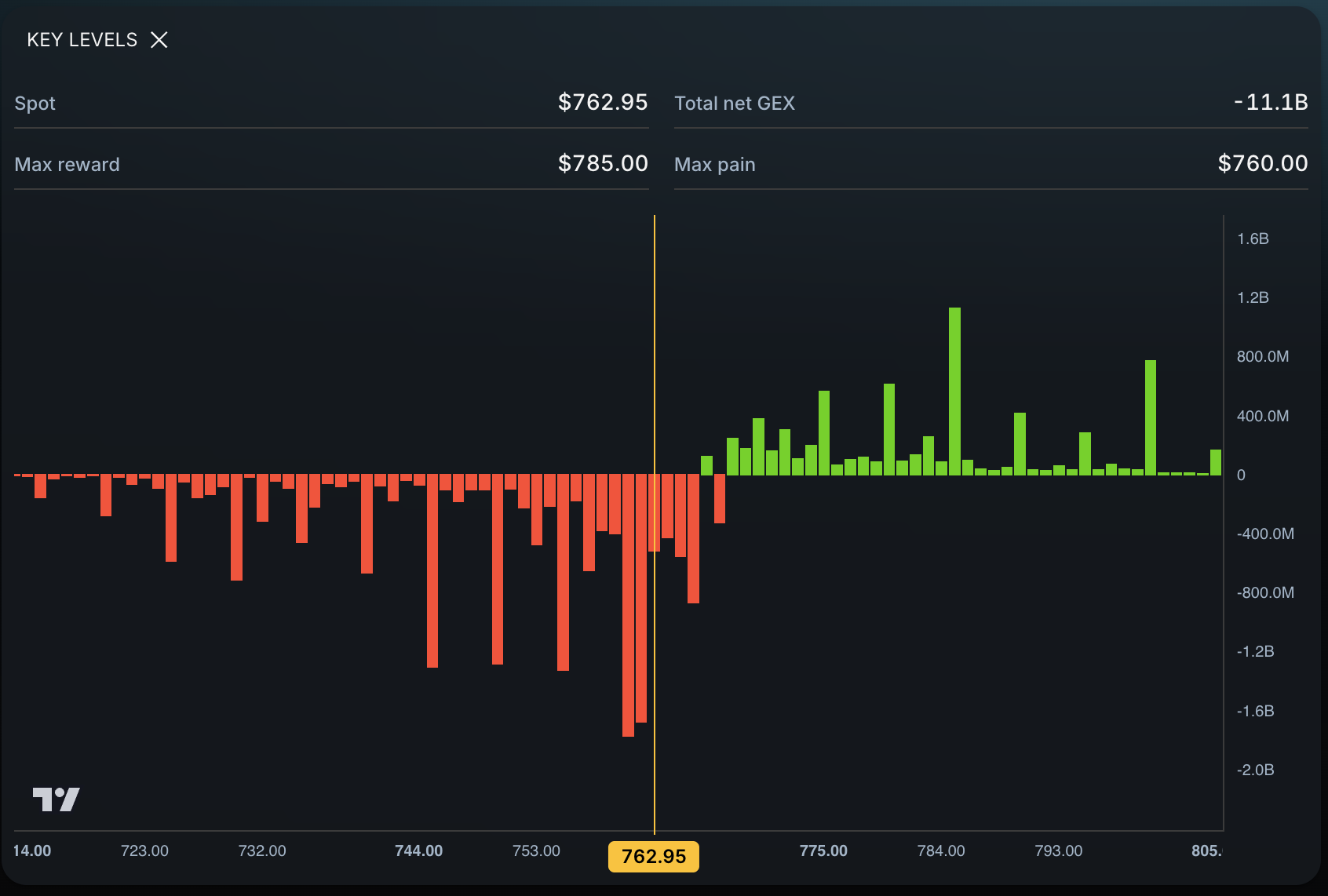
Eden organizes market data and options positioning into key levels and price targets. It can add context that is not obvious from candles alone, while leaving the final trigger and risk choice to the trader.
A two-week readiness test
Before buying, keep a simple log for ten trading sessions:
| Question | What to record |
|---|---|
| What took time? | Minutes spent finding and copying levels |
| What stayed unclear? | Entry area, invalidation context, or target |
| What did you actually use? | Sources that changed the plan |
| What was repeated? | Work done again for every ticker |
| What could be removed? | Tabs or subscriptions with the same job |
Then compare the product against that log. Estimate how often you would use it and which manual step it would replace. Do not grade the purchase by hoped-for profit. Grade whether the product addresses the documented problem at a cost you can comfortably carry.
How Eden fits the decision
Eden currently starts at $39 billed monthly, and a credit card is required. Read what to expect from a $39-a-month trading tool for the verified billing choices and a detailed pricing test.
Already paying for a tool?
This readiness test is for the first purchase. If the charge is already on your statement, use the monthly keep-or-cancel review instead.
Frequently asked questions
Do I need a large trading account before paying for software?
There is no universal account-size rule. The fee must fit your available capital without creating pressure to trade, and the product should solve a problem you have already observed.
Should a beginner pay for market-level software?
Only when the beginner has a stable enough process to explain what the product will do. Software cannot replace a strategy, risk rules, or basic market education.
How often should I expect to use a paid tool?
Often enough that it addresses repeated friction. Record the problem across normal sessions before buying instead of assuming future use.
Takeaway
Start paying only after you can name the recurring problem, explain how the output will change a decision, expect to use it regularly, and afford the cost without forcing trades. Readiness comes from a stable process—not from trying to buy confidence.