Unusual options activity can help you find a ticker. Key levels help you decide whether, where, and how to trade it. For most active traders, the idea comes first and the trade map comes second. Neither step should replace the other.
The moment that creates the mistake
A large call order appears on a flow feed. The stock begins moving. You buy because someone spent serious money, but you have no idea whether price is entering resistance, where the idea becomes wrong, or how much room remains.
The flow may be real while the entry is poor. A large order can be part of a spread, hedge, closing trade, or longer-term position. Even a bullish opening trade does not define your timing.
What unusual options activity does well
An unusual options screener can narrow a large market into contracts or tickers worth investigating. It can help answer:
- Where is options activity larger than normal?
- Which tickers are attracting premium or volume?
- What expiration and strike are involved?
- Is the activity repeating?
That makes flow useful for discovery. It does not automatically tell you where to enter the stock or option.
What key levels do well
Key levels organize the trade after you choose the ticker. They help answer:
- Where could price react?
- What reaction would make an entry valid?
- What price behavior would weaken the idea?
- Where is the next potential target?
- Is enough room left to justify the risk?
A level is not a prediction. It is a place where you plan what to do if price arrives.
Which should come first?
Use this order when the flow feed generates the idea:
- Find the ticker. Treat unusual activity as a reason to investigate.
- Check the contract context. Review expiration, strike, size, and whether the trade appears to open or close when that information is available.
- Open the price chart. See whether price is extended, trapped in a range, or approaching a known level.
- Build the key-level map. Mark the reaction area, invalidation, and potential target.
- Wait for the setup. Do not enter only because the flow appeared.
If you already trade one ticker every day, key levels may come first. Build the map before the session, then use flow as added context when price reaches a decision area.
A simple example
Imagine unusual call activity appears while a stock trades at $99.80. Resistance is near $100 and the next potential target is $101. Buying immediately may leave little room if the stock rejects $100.
A better plan might wait for price to break and hold $100, define invalidation below the completed reaction, and check whether the target still leaves enough room. The options activity found the idea; the level defined the decision.
This example is illustrative and not a recommendation.
How Eden connects the two jobs
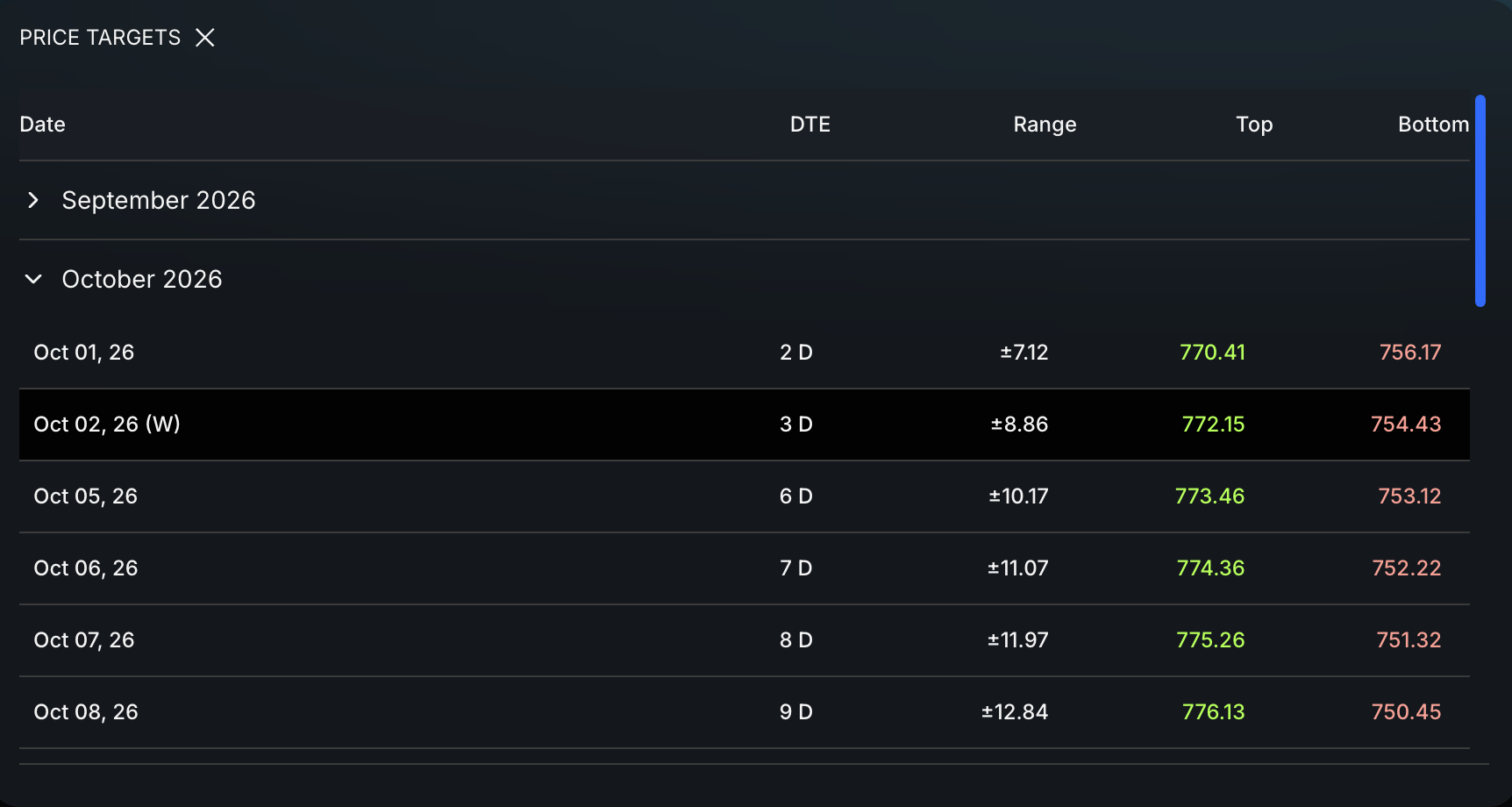
Eden’s screener can help surface unusual options activity. Once you choose a ticker, its ticker view shows current price, nearby key levels, possible invalidation context, and potential price targets.
Eden does not assume that unusual flow is bullish, bearish, or a reason to enter. It keeps discovery and planning connected without pretending they are the same decision.
When flow should not control the trade
Slow down when:
- price has already moved most of the way to the next target,
- the contract has a distant expiration that does not match your day trade,
- the trade could be part of a multi-leg position,
- the chart offers no clear invalidation,
- or you are copying the order without knowing its purpose.
Read Stop Chasing Trades when a flow alert arrives after the move has begun.
Frequently asked questions
Is unusual call activity always bullish?
No. A call transaction can open, close, hedge another position, or form one leg of a spread. Flow requires context.
Can key levels find trade ideas?
They can show where a ticker may become interesting, but a screener is generally better for narrowing many tickers into a watchlist.
Do I need both tools?
Only if both jobs matter to your process. A trader who follows a fixed watchlist may need levels more than discovery. A trader searching the entire market may value a screener first.
Takeaway
Unusual options activity answers “What should I investigate?” Key levels answer “What must happen before I enter, where is the idea wrong, and where could I take profit?” Find the idea, then build the plan.