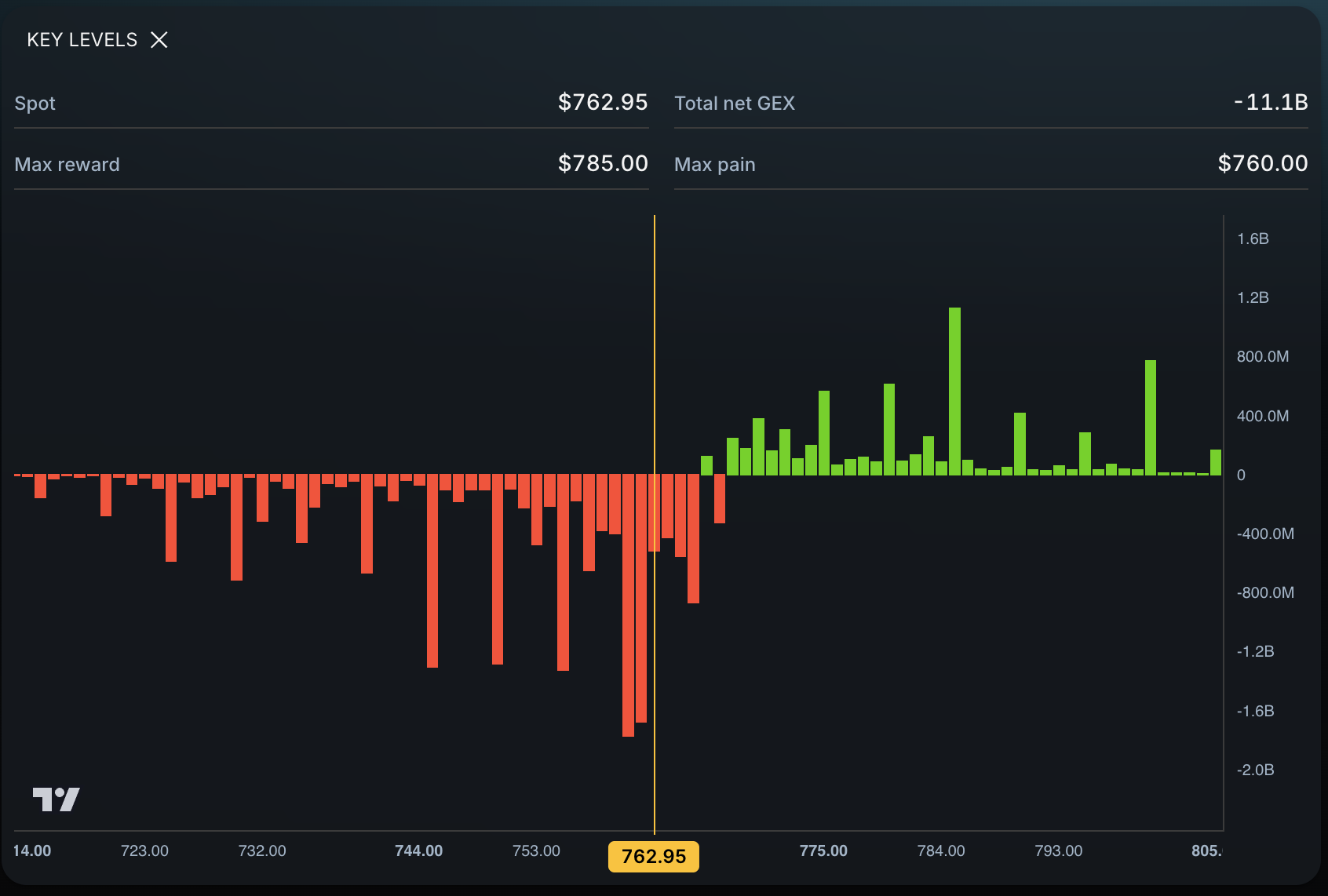
SPY and QQQ support and resistance become more useful when each line has a job. Instead of filling a chart with every possible level, combine price action with options positioning, then decide which level could guide an entry, invalidate the idea, or become a target.
The problem with crowded charts
Many traders start the day by marking yesterday’s high and low, the overnight range, VWAP, round numbers, gap levels, and several lines from social media. Soon the chart looks like a road map with every street highlighted.
That creates a decision problem. When price reaches one of the lines, the trader may not know whether to enter, wait, exit, or ignore it. Too many levels can be as confusing as having none.
What support and resistance really mean
Support is an area where selling may slow and buyers may respond. Resistance is an area where buying may slow and sellers may respond. Neither is a wall. Price can pause, reverse, or move straight through.
Options positioning adds another clue. Large groups of options are tied to certain strike prices. Hedging around those strikes may affect how price behaves nearby. Think of price action as the road and options positioning as traffic around major exits. The traffic matters, but it does not control every car.
A manual process for finding SPY and QQQ levels
1. Mark the basic price references
Start with the prior day’s high, low, and close. Add the overnight high and low. These are easy for many traders to see, so they can become common decision areas.
2. Add the current range
Note where SPY or QQQ is trading inside the recent range. A level five points away may matter later but may not help with the next decision.
3. Add options-positioning levels
Review the nearby areas suggested by options data. If an options level sits close to a visible price level, that overlap may deserve more attention. It still needs confirmation from price.
4. Remove weak or duplicate lines
Keep only the levels that have a clear purpose. A useful chart often needs fewer lines than a first draft.
5. Define the reaction before the trade
Write what you need to see:
- Hold: price tests a level and stays above or below it.
- Reclaim: price crosses back over a lost level and stays there.
- Rejection: price tests a level and quickly moves away.
- Break: price moves through a level with enough strength to change the plan.
This helps you respond to price instead of guessing what it will do.
Give every level one job
| Job | Question to answer |
|---|---|
| Entry area | What reaction must happen before I enter? |
| Invalidation | What price behavior would prove my idea wrong? |
| Target | Where could I reduce risk or take profit? |
| Market reference | What level helps me understand direction but does not trigger a trade? |
A single level can sometimes do more than one job, but writing the purpose first keeps the plan simple.
How Eden makes the process faster
You can build this map manually every morning. Eden shortens that routine by putting the current SPY or QQQ price, nearby key levels, possible invalidation context, and potential price targets in one view. That leaves more preparation time for deciding what price must do before the trade becomes valid.
A simple Eden workflow is:
- Enter SPY or QQQ.
- Review the closest levels around the current price.
- Choose the levels that matter for your setup.
- Define the reaction you need to see.
- Set an invalidation area and a possible target before entering.
- Recheck the analysis during the session.
Eden shortens the research. It does not choose the trade or guarantee that a level will hold.
For a comparison with other charting workflows, read TradingView Support and Resistance vs. Options-Derived Key Levels. To compare free and live data, read Best GEX Tools for Day Traders.
Premarket levels and live updates
Premarket price can move before the options session becomes active. That means an early plan may combine current price information with the latest available options context. Check timestamps and update the plan after the open instead of assuming every morning level stays equally important all day.
Some futures traders also watch SPY beside ES and QQQ beside NQ. The ETF can provide context, but it is not the same instrument as the futures contract.
A short SPY or QQQ checklist
- Where is price inside the prior and overnight ranges?
- Which nearby level has the clearest purpose?
- What reaction must happen before entry?
- What would prove the idea wrong?
- Where is the next reasonable target?
- Has the analysis updated since the plan was made?
If you can answer those questions, your chart is doing useful work. If you cannot, adding another line probably will not solve the problem.
Frequently asked questions
Can SPY levels help an ES trader?
They can provide extra market context because the instruments are closely related, but SPY and ES are different products. Do not treat a SPY level as an exact ES price.
Can QQQ levels help an NQ trader?
They can provide context for technology-heavy market movement, but QQQ and NQ do not trade at the same price and are not interchangeable.
Are options-positioning levels trade signals?
No. They are areas to watch. Wait for price to hold, reclaim, reject, or break a level before deciding whether it supports your setup.
Takeaway
Useful SPY and QQQ support and resistance starts with a small number of levels and a clear plan for each one. Price action shows what is happening. Options positioning adds context about where reactions may matter. Eden combines those pieces so you can build the plan faster and enter only after your conditions appear.
New to the workflow? Start with Your First Five Minutes in Eden, or see Eden’s product view.