If every winning trade receives an A and every losing trade receives an F, the scorecard cannot tell whether the process works. A good decision can lose. A weak decision can win. Futures evaluations make this confusion worse because account rules add another result layer.
Use four separate scores
| Score | Question |
|---|---|
| Setup quality | Did the trade meet the strategy’s written conditions? |
| Execution quality | Did entry, stop, target, and management follow the plan? |
| Rule compliance | Did the trade and session follow the evaluation’s current rules? |
| Financial outcome | What was the actual gain or loss? |
Do not combine these into one pass/fail grade.
Capture evidence before entry
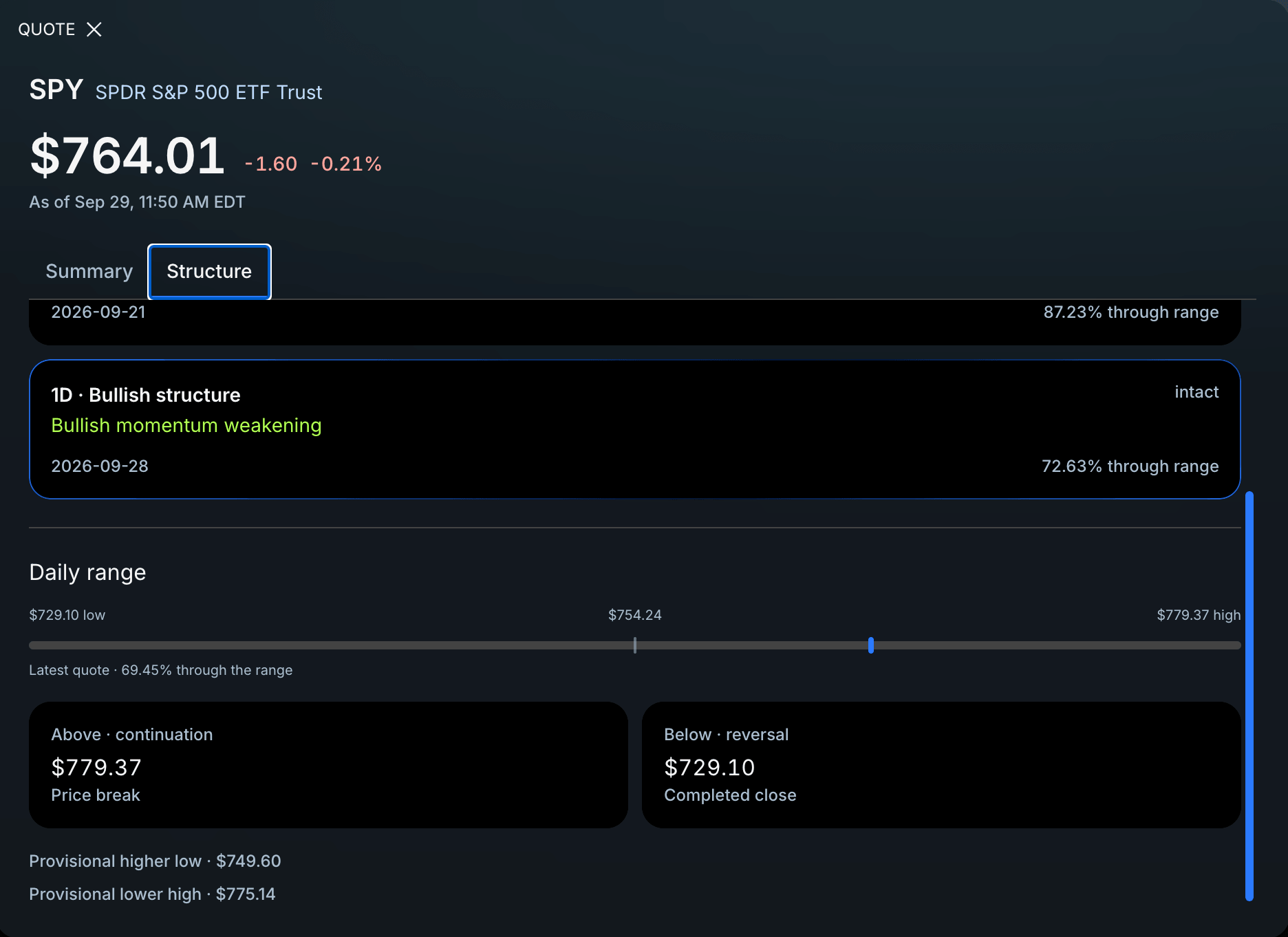
Write the setup, trigger, invalidation, target, and size before the order. If using related ETF options context, record the Eden level or target that mattered, then keep the actual entry and stop on the futures chart.
This creates a timestamped story that hindsight cannot easily rewrite. The futures/ETF cornerstone guide explains how that context fits without replacing native futures analysis.
Review combinations, not isolated grades
- Good process, losing outcome: may be normal uncertainty.
- Poor process, winning outcome: deserves correction despite the profit.
- Rule-compliant loss: can still damage the evaluation but is different from a rule breach.
- Rule breach with a winning trade: remains a process problem.
Read how to lose correctly during an evaluation for the loss review. If evaluations keep ending, use the recovery audit before purchasing another.
A weekly review
Group trades by setup and session. Count how often the trigger was present, invalidation was respected, size fit, and rules were followed. Only then compare outcomes.
The scorecard should answer:
- Is the strategy being executed consistently?
- Which error repeats most?
- Does size change behavior?
- Are losses coming from the method or from breaking it?
- What one behavior will be tested next week?
It should not claim that good process guarantees profitability, passing, or a payout.
Frequently asked questions
How many trades make a useful sample?
There is no universal number. Use enough comparable trades to see repeated behavior rather than drawing a conclusion from one result.
Should rule compliance be part of strategy performance?
Track it separately. A strategy can be followed while an evaluation rule is broken, and either issue needs a different fix.
Can Eden create the scorecard?
No. Eden provides market context that can be documented. The trader or journal records and reviews the process.
Takeaway
A scorecard should show how you traded, not only what you earned. Separate setup, execution, rules, and outcome so the next change addresses the real problem.