A correct evaluation loss follows the written setup, respects invalidation, fits the provider’s rules, and ends without a revenge trade. It still hurts, and it still reduces the account. “Correct” describes the process, not the financial result.
What a correct loss includes
Before entry, the trader documented:
- the futures setup and trigger,
- the market evidence that would invalidate it,
- a potential target or next decision area,
- a size that fit both stop distance and evaluation rules,
- and a condition for ending the session.
During the trade, the trader followed that plan. After the stop, the plan was not rewritten to prove the trade should have won.
What a process failure looks like
A process failure can include entering before confirmation, moving the stop, adding size outside the plan, ignoring a provider rule, or immediately trading again to recover the loss. A profitable outcome does not turn those decisions into good execution.
This is why a trading scorecard must separate process from outcome.
Use ETF options context before the trade
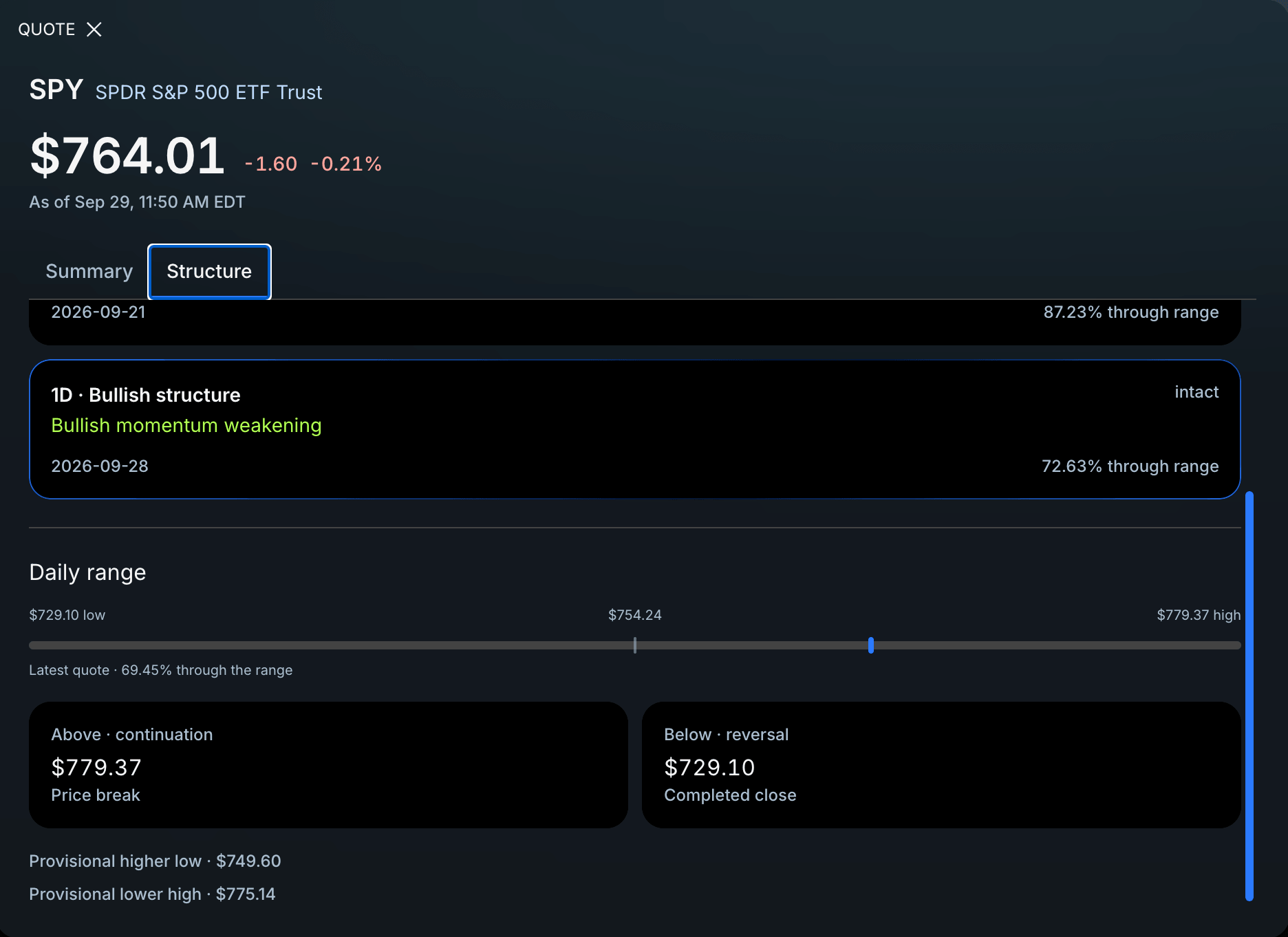
For ES, NQ, or GC, Eden can add SPY, QQQ, or GLD options-derived levels and potential targets before entry. Record that map, then define the executable trade on the futures chart.
The ETF map may help reveal limited remaining room or a nearby decision area. It cannot guarantee a hold or excuse a widened futures stop. Start with the futures trader’s ETF options-level guide.
A five-minute post-loss review
- Did the entry meet the written trigger?
- Did invalidation occur as defined?
- Did size fit the stop and rules?
- Did I exit according to the plan?
- Can I stop without trying to earn the loss back now?
If the answers are yes, log the result and protect the process. Strategy evaluation requires a larger sample than one trade.
If repeated losses end evaluations, use the recovery audit before buying another. The answer may be strategy research, smaller size, a different session, or no new purchase yet.
Frequently asked questions
Does following the rules make a losing trade good?
It can make the execution sound, but the strategy still needs review across a meaningful sample.
Should I immediately take the next setup after a loss?
Only if it fits the written session plan and evaluation rules. Do not trade solely to recover the prior result.
Can a correct loss still fail an evaluation?
Yes. Process quality does not guarantee the account outcome.
Takeaway
Lose according to a plan you can review. Protecting the process does not promise a payout, but it gives you evidence that a P&L-only review cannot provide.