Buying another evaluation can feel like a reset, but the account is new while the old process remains. Before paying again, identify whether previous attempts failed from ordinary strategy losses, rule breaches, oversizing, unfinished plans, or a mix of them.
There is no shame in stopping to review. The goal is not to prove that you deserve another attempt. It is to learn whether anything would be different.
Build an evaluation failure log
For each failed attempt, record:
- provider and rule set used at the time,
- instrument and session,
- planned setup,
- whether entry conditions were met,
- planned and actual invalidation,
- position size,
- rule breach, if any,
- and what happened after the first loss of the day.
Rules differ across providers and may change. Use the terms that governed that specific account rather than applying one firm’s limits to every evaluation.
Sort failures into four groups
Valid strategy losses
The plan was complete, risk fit the rules, and the trade lost. This is part of uncertain markets.
Execution errors
Entry, stop, target, or exit differed from the written plan.
Sizing errors
The setup required a stop or exposure that did not fit the account, but the trade was taken anyway. Review why sizing up changes behavior.
Evaluation-rule errors
A daily, trailing, consistency, or other provider-specific limit was misunderstood or ignored. Verify current rules directly with the provider before another purchase.
Repair one bottleneck at a time
If the failure was unclear invalidation, use the pre-trade invalidation guide. If it was judging everything by P&L, rebuild the trading scorecard. If the process was sound but the trades lost, learn how to lose correctly during an evaluation.
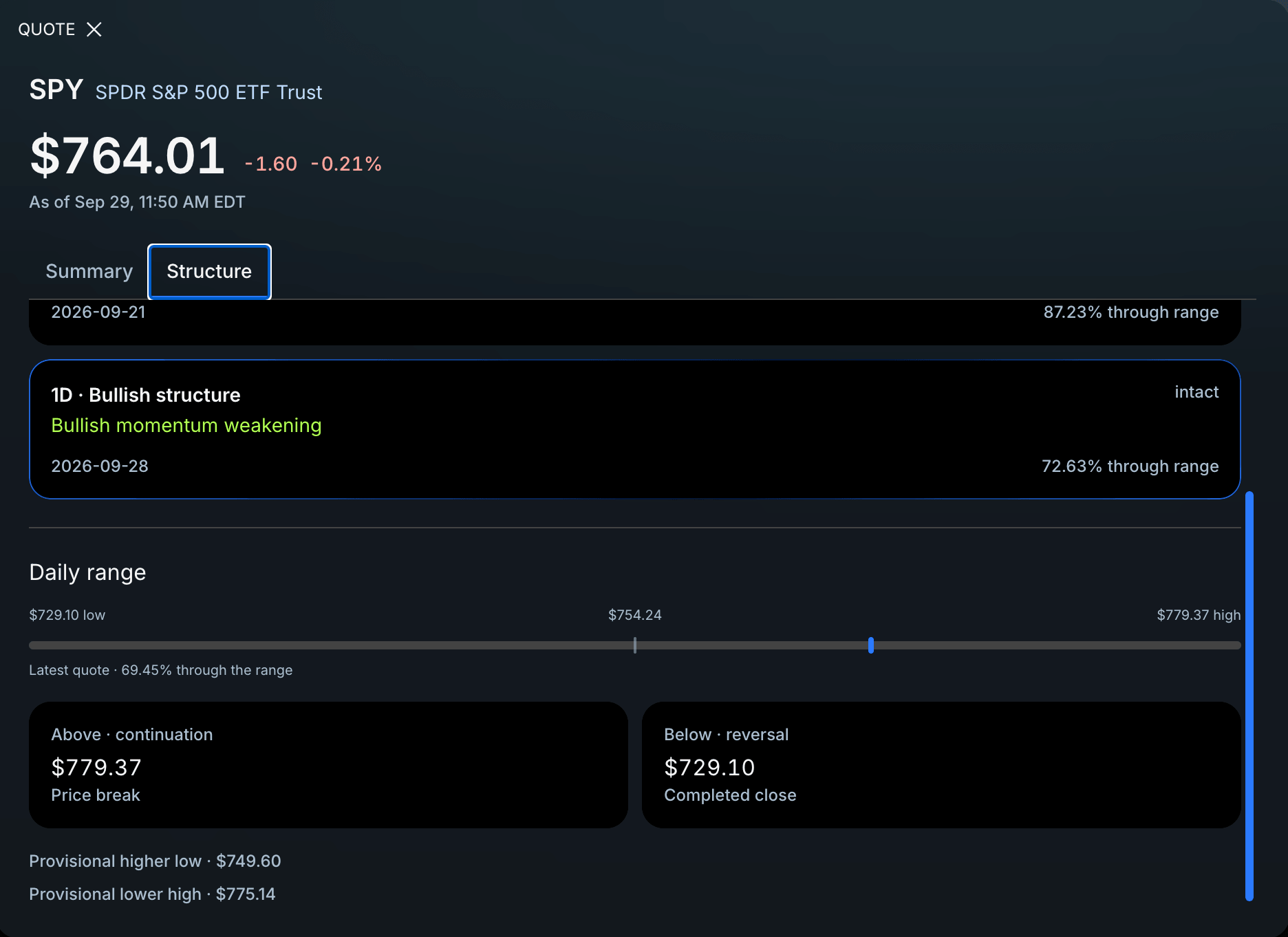
Eden can help when the documented gap is market context: unclear levels, no potential destination, or entering after most of the room is gone. The futures trader’s ETF options-level guide explains the workflow. It cannot fix oversizing, rule knowledge, discipline, or execution by itself.
A repurchase checklist
Before another evaluation, you should be able to answer:
- What exact behavior caused the prior failures?
- What process changed?
- How will the change be measured?
- What will stop the trading day before a rule breach?
- Can the process be followed without needing a payout quickly?
If the answers are vague, another purchase may only repeat the same test.
Frequently asked questions
How many failed evaluations are too many?
There is no universal number. Repeated failure without a documented change is the stronger warning.
Will a different provider solve the problem?
Only if the old problem was a genuine mismatch with verified rules. A new provider does not repair execution, sizing, or discipline.
Can Eden help me pass?
Eden provides additional market context. It does not claim to increase the chance of passing or receiving a payout.
Takeaway
Do not buy a reset when the process needs repair. Classify the failures, change one measurable behavior, and decide whether another evaluation fits afterward.