Options swing trading means holding an options position for more than one day to trade a move that may last several days or weeks. The trader must be right about more than direction. Time, implied volatility, strike selection, and expiration can all change the result.
An options trade is like buying an ice cube for a trip. Direction tells you where you want to go, but time matters because the ice is changing while you travel. If you are still choosing a holding style, start with the difference between swing trading and day trading.
How does an options swing trade work?
A basic long-call example may look like this:
- The trader has a bullish idea for a stock.
- The stock reaches a planned support or trigger level.
- The trader chooses a call with a strike and expiration that fit the expected move.
- The plan defines what stock-price behavior invalidates the idea.
- The trader exits at the target, invalidation, or time deadline.
A put may be used for a bearish idea. Multi-leg strategies add more rules and risks.
Why direction is not enough
A stock can move in the expected direction while the option loses value. This can happen because:
- the move is too small,
- the move takes too long,
- implied volatility falls,
- the option is too far out of the money,
- or the bid-ask spread is wide.
The OCC explains that options with less time remaining and strikes farther out of the money face a greater chance of losing some or all of their value.
Build the stock plan first
Do not begin with a cheap option contract. Begin with the underlying stock or ETF.
Use Eden to mark:
- the bullish trigger, or P-Trans,
- the bearish trigger, or N-Trans,
- nearby areas of interest,
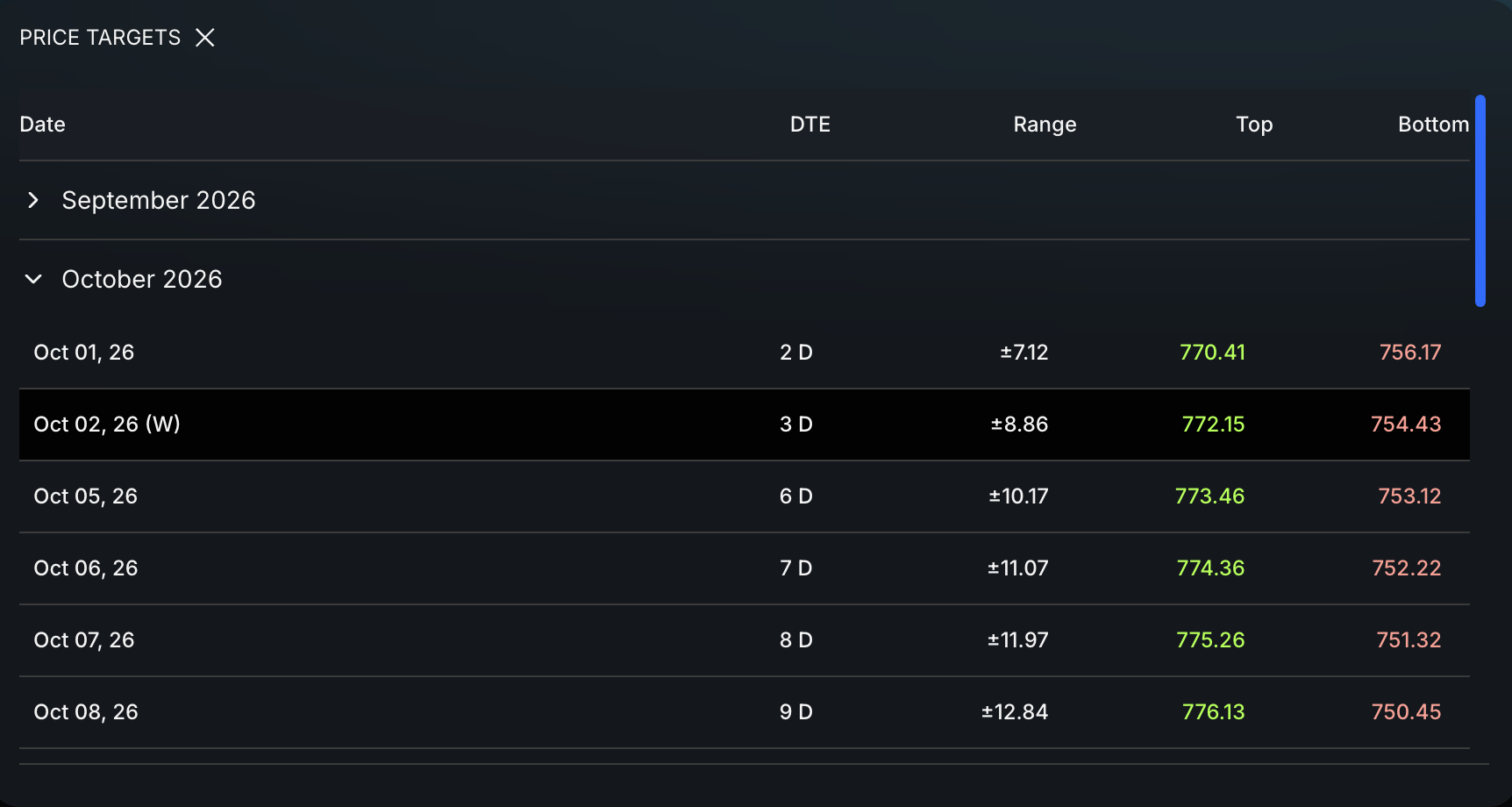
- and the weekly or monthly Price Targets.
Then write the stock-price trigger, invalidation, and target. Choose the option only after the map makes sense.
If Robinhood is your broker, use the dedicated swing trading on Robinhood workflow to review order types and overnight risk before submitting the trade.
How much time should the option have?
There is no universal expiration. The contract needs enough time for the planned stock move, but more time usually costs more.
Ask:
- How many days might the setup need?
- Is an earnings report inside the holding period?
- How quickly is time value changing?
- What happens if the stock moves sideways?
- Can the position be exited if the spread becomes wide?
Do not choose an expiration only because the contract is inexpensive.
Define risk in two places
An options swing plan needs:
- Underlying invalidation: The stock or ETF behavior that proves the chart idea wrong.
- Position risk: The amount of money that can be lost on the option position.
These numbers are connected but are not always identical. An option’s price can change sharply before the stock reaches the chart invalidation.
Common beginner mistakes
- Buying a far out-of-the-money option because it looks cheap
- Using an expiration that gives the setup little time
- Ignoring an earnings announcement
- Entering without checking the bid-ask spread
- Holding until expiration because the trader does not want to close a loss
- Treating the maximum possible gain as the expected result
Frequently asked questions
Can I lose the full premium on a long option?
Yes. A long option can expire worthless, and the holder can lose the premium paid plus transaction costs.
Are options better than shares for swing trading?
They are different tools. Options can limit a long buyer’s loss to the premium but add expiration, volatility, and liquidity risks. Shares do not expire but still carry market risk.
Should beginners sell uncovered options?
Uncovered options can create very large or unlimited losses. Beginners should understand the OCC disclosure document and broker requirements before using any options strategy.
Official sources
- OCC, Characteristics and Risks of Standardized Options
- Charles Schwab, What Is Swing Trading and How Does It Work?
Takeaway
Options swing trading starts with a stock-price plan. Define the trigger, invalidation, target, and time window first. Then choose an option whose strike, expiration, cost, and liquidity fit that plan.